 Many skin growths look alarming at first glance, while some dangerous lesions appear subtle. Because appearances can be misleading, distinguishing skin cancer from benign lesions requires medical training, clinical experience, and sometimes diagnostic testing. Understanding how dermatologists evaluate skin changes can help patients know when to seek care and why professional evaluation matters. Texas Surgical Dermatology, led by Dr. Tri H. Nguyen who is a Mohs fellowship-trained specialist, provides consultations to patients in Houston, Katy, Spring, The Woodlands, Texas, and surrounding locations.
Why Visual Appearance Alone Is Not Enough
While some benign growths have classic features, others closely resemble skin cancer. Likewise, early skin cancers may appear small, flat, or lightly pigmented, making them easy to overlook.
This overlap is why self-diagnosis is unreliable and professional evaluation is essential.
Common Types of Benign Skin Lesions
Benign lesions are noncancerous and often harmless. Common examples include:
- Moles that remain stable in size and color
• Seborrheic keratoses that appear waxy or stuck on
• Cherry angiomas that are bright red and dome shaped
• Skin tags that form in friction areas
Although benign, changes in these lesions should still be evaluated.
Warning Signs Dermatologists Look For
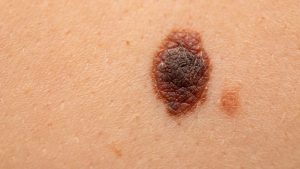
Dermatologists use specific criteria to identify concerning lesions. Changes that raise suspicion include asymmetry, irregular borders, uneven color, increasing size, bleeding, itching, or failure to heal.
For pigmented lesions, dermatologists often apply the ABCDE guideline to assess risk.
The Role of Dermoscopy
Dermoscopy is a specialized tool that allows dermatologists to see structures beneath the skin surface that are invisible to the naked eye. This enhanced view improves diagnostic accuracy and helps distinguish benign patterns from malignant ones.
When a Skin Biopsy Is Needed
If a lesion appears suspicious, a biopsy is performed to confirm the diagnosis. A small sample of tissue is removed and examined under a microscope.
Biopsy is the only definitive way to determine whether a lesion is cancerous.
Why Early Evaluation Matters
Early detection of skin cancer leads to simpler treatment and better outcomes. Even lesions that seem minor should be evaluated if they change or persist.
Regular skin checks and prompt evaluation of new or changing spots are key to maintaining skin health.
FOR MORE INFORMATION CONTACT OUR BOARD CERTIFIED IN DERMATOLOGISTS AT TEXAS SURGICAL DERMATOLOGY IN SPRING, TX
For more information on procedures and treatments offered at Texas Surgical Dermatology PA please call 832.663.6566 or click here to contact our dermatologists. Helping patients in Houston, The Woodlands, Spring, Katy and other surrounding areas of Texas.